

| +49 6221 54-3085 | |
| Email (click to copy) | |
|
Institut für Computerlinguistik Im Neuenheimer Feld 325 D-69120 Heidelberg Germany |
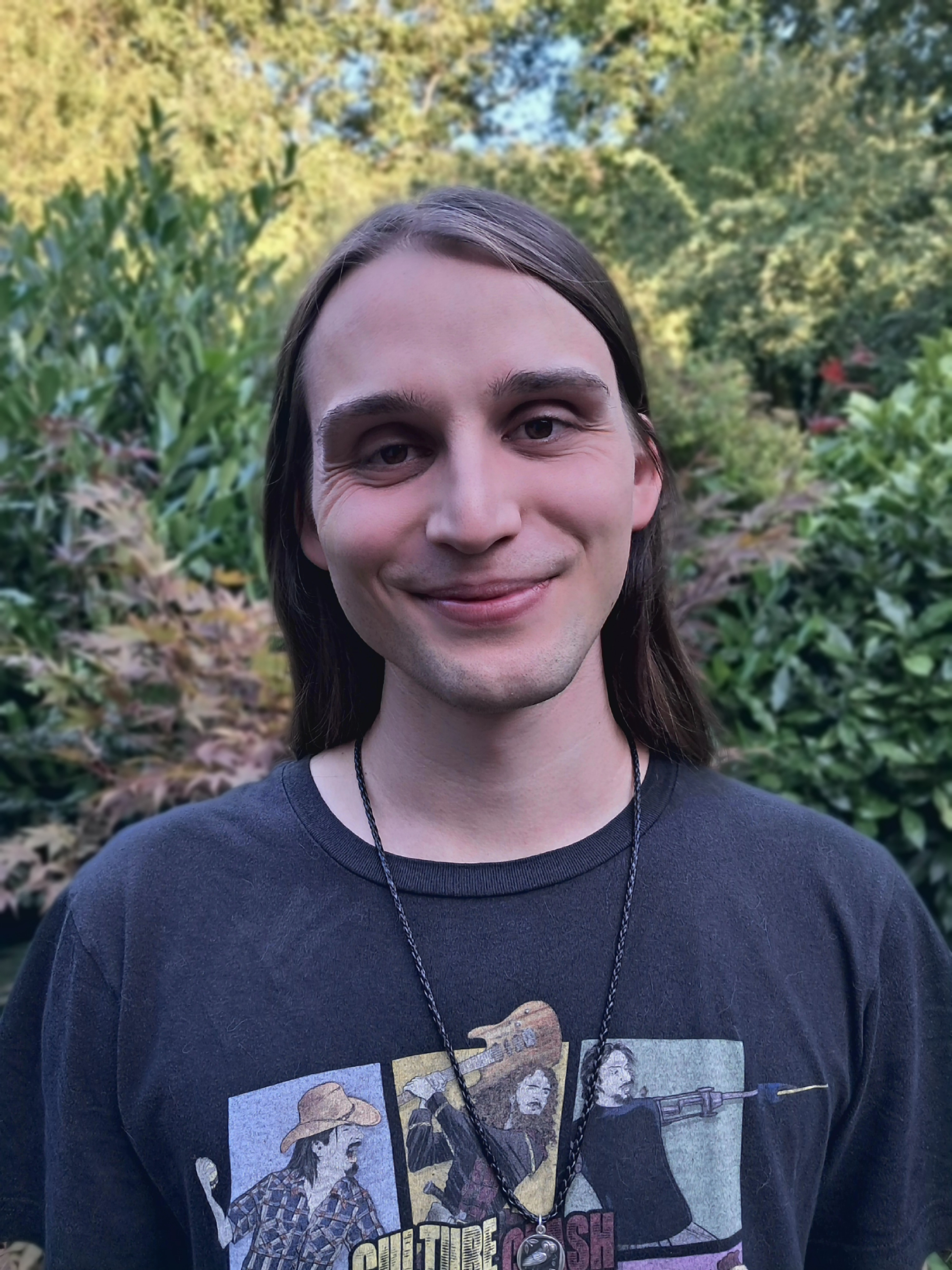
Since September 2022, I am a Doctoral Student under the supervision of Prof. Dr. Anette Frank at the Department of Computational Linguistics at Heidelberg University. My research focuses on understanding the inner workings of language models, an area known as mechanistic interpretability.
I am particularly interested in investigating how language is represented within these models and how different languages are organized and structured.
In addition to my work on multilingual language model interpretability, I am passionate about ancient languages.
I aim to apply computational linguistics methods to this domain, exploring how modern NLP techniques can be effectively leveraged for literary studies and linguistic analysis of historical texts.
The talk "From Classics to Circuits" discusses language models for Ancient Greek and Latin—linked to our semantic retrieval work in Pisa—before turning to my current research on mechanistic interpretability in multilingual language models. Details here.
I joined the one and only AI Coffee Break at ACL 2025 for a short interview about my research. Watch the interview here.
At KONVENS 2025, I will present my master’s thesis "Investigating Language Models for Classical Philology: Aspects of Morphology, Syntax, and Knowledge from a Multilingual Perspective," which has been selected as the 2025 winner of the Best Student Thesis Award. More information is available here.
I've been invited as a visiting researcher for the entire month of September. We will be working on SPhilBERTa and retrieval systems for Classics.
The talk "Ira ex machina: Multilingual Models and Emotion Analysis in Classical Texts" covered my insights into multilingual language models for Classics, as well as my current project on emotions in Ancient Greek and Latin texts. The abstract can be viewed here.
I presented "It’s All Greek (and Latin) to Me: Multilingual Language Models and the Challenges of Digital Classics", as part of the seminar and panel discussion "Digital Humanities and Infrastructures: Tools, Archives, and Theory", co‑organized by the India offices of Freie Universität Berlin and Heidelberg University with IIT Indore. More information here.
Department of Computational Linguistics (ICL), Heidelberg University
Tutoring the Programming II (Python) course at Heidelberg University
Tutoring the Formal Syntax course at Heidelberg University
Tutoring language course Ancient Greek at Heidelberg University
Tutoring the Statistical Methods course at Heidelberg University
Tutoring the Formal Semantics course at Heidelberg University
Tutoring the Programming II course at Heidelberg University
Tutoring the Introduction to Computational Linguistics course at Heidelberg University
Software programming and digitalization for Biblical Hebrew at Marburg University
Neuphilologische Fakultät, Heidelberg University, Germany
Neuphilologische Fakultät, Heidelberg University, Germany
Philosophische Fakultät, Heidelberg University, Germany
Friedrich-Wilhelm-Gymnasium Trier, Germany

 Research Stay at the